
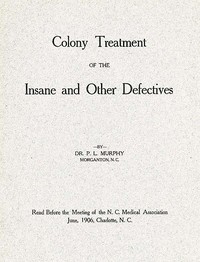
Colony Treatment of the Insane and Other Defectives by P. L. Murphy
The Story
So, Colony Treatment of the Insane and Other Defectives was written by P. L. Murphy, a doctor from the early 1900s. He thought big, scary asylums—full of locks, straps, and misery—were wrong. His big idea? Move patients out to the countryside, in little communities called 'colonies.' Sounds nice, maybe? But here's the plot twist: these places weren't just nice getaways. People in the colonies had to work—tend animals, grow crops, cook meals. Murphy argued this would 'heal' their minds through fresh air, routines, and manual labor. But no one asked the patients. If you love stories about how people tried (and maybe failed) to do the right thing, this is it. Kind of like watching a train wreck in slow motion, but with good intentions. And the writing drips with old-fashioned confidence—like he knows his plan is the only way.
The main 'mystery' you'll chase through this book? Whether the cure was actually help—or just a gentler, hidden form of control. That tension keeps you reading, feeling stuck between two scary possibilities.
Why You Should Read It
This isn't just a dusty old book for historians. I legit got hooked because it forced me to ask personal questions. Today, we think we've ditched the bad old days of gut-wrenching treatments. But reading this, I had to wonder: what 'colonies' are we building right now for people we don't understand? Maybe it's a certain kid in a silent classroom, or an old person shut away in a nursing home. Murphy's pretty sure he's being kind. And that's chilling. You can picture good-hearted doctors and family members convincing themselves they're doing the right thing. Yet behind every idea of 'better treatment' is someone else deciding what 'better' means. If you like books that mess with your head and challenge your sense of ethics—stay away from dry textbooks. This one makes you feel furious, sad, and surprised. And honestly, a bit scared of how well-meaning people get things so wrong. It's not a tough read either; the sentences are short enough to keep up with while your brain races through the meaning.
Final Verdict
Perfect for lovers of dark history, ethics fans, and anyone who has ever visited an old asylum and felt the walls close in. Also for you if you like movies like The Village or One Flew Over the Cuckoo's Nest. It's very short—only a pamphlet, maybe 90 pages—so it fits even the attention span of someone just browsing. I'd warn you though: some parts feel gross in hindsight. Like honest-to-god ideas about hygiene, work ethics, and disability that make your skin crawl. But those parts make you grab the book harder. Mostly, hand this to a friend who loves a provoking conversation starter. Skip it if you want a feel-good escape or a boring academic list of facts. Recommend a dark coffee or tea alongside it. You're going to need something strong to talk through the feelings it leaves you with.
This is a copyright-free edition. Share knowledge freely with the world.
Emily Smith
2 months agoAfter spending a few days with this digital edition, the bibliography and references suggest a high level of research and authority. It cleared up a lot of the confusion I had previously.
Susan Thompson
2 years agoI wanted to compare this perspective with traditional views, the nuanced approach to the central theme was better than I expected. It definitely lives up to the reputation of the publisher.
Elizabeth Taylor
2 years agoExceptional clarity on a very complex subject.



John Martinez
4 months agoThis was exactly the kind of deep dive I was searching for, the author doesn't just scratch the surface but goes into meaningful detail. A perfect balance of theory and practical advice.