
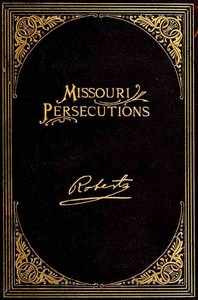
The Missouri Persecutions by B. H. Roberts
Okay, book friends—get ready. I just finished The Missouri Persecutions by B. H. Roberts, and it is not what you expect from an old history book. Think more like a whistleblower report from the 1800s. Roberts went straight to the source material. We‘re talking about actual court records, personal letters, sworn statements, and newspaper clippings from when everything went down. This isn’t a detached, academic stroll in a museum. It feels urgent.
The Story
Picture this: It‘s the 1830s. A bunch of Mormon families move into Missouri because they think it's their promised land. But local settlers already see land value, and they don’t dig this weird new religion. It starts with name-calling and dirty looks. Then it escalates into angry mobs, militia attacks, and legal “extermination orders.” That means the Governor actually said to treat Mormons as enemies who had to be driven out—or killed. Roberts walks you through the mess county by county. You’ll read about Colonel William Parris’ dramatic defense, Judge Austin’s corrupt court, the Haun's Mill massacre, and the horror of families losing everything under threats of death. The climax is an ugly forced exile in the middle of winter. Roberts organizes all the chaos into a story you can follow.
Why You Should Read It
This is the part that got me. The most profound thing about the book isn't the gunfire—it’s the bravery. Ordinary farmers and mothers stood in front of pitchfork-waving mobs and said no. And surprisingly, a lot of gentiles (non-Mormons) also spoke up for them! But they got punished too. I love that Roberts isn’t trying to be cool or neutral—he straight-up argues that the Missouri mobs broke every law they were supposed to uphold and got away with it. That’s gutsy. You can feel his anger that the government failed these people. And that’s the shocking part: this actually happened in America. Right here. A whole population pressured into losing everything because their different church freaked everyone out. It's a challenge to think about other kinds of persecution still happening today. You evaluate, question, and connect it to modern biases. That’s smart reading.
Final Verdict
This book is for anyone who loves raw American history, religious studies that don't feel like Sunday school, or true stories of injustice that hit like a train. If you’ve watched Hell on Wheels or loved The 1619 Project, you’ll click with this. For LDS Church people, it’s an essential read covered often but never this in-depth. But I genuinely recommend it to everybody else too—anyone shocked that our history holds such brutality and resilience. The pacing could slog in parts if B. H. Roberts gets too legal with evidence lists, so grab a notepad for names. Still, put this on your shelf next to Rough Stone Rolling and A People's History of the United States. The short form? Grade: A-minus. Shook me up. Go order it.
This digital edition is based on a public domain text. It serves as a testament to our shared literary heritage.
Jessica White
9 months agoAfter spending a few days with this digital edition, the historical context mentioned in the early chapters is quite enlightening. Definitely a five-star contribution to the field.
Michael Williams
8 months agoHaving followed this topic for years, I can say that the chapter on advanced strategies offers insights I haven't seen elsewhere. I’ll definitely be revisiting some of these chapters again soon.
Donald Anderson
2 years agoThe layout of the digital version made it easy to start immediately, the insights into future trends are particularly thought-provoking. I'm genuinely impressed by the quality of this digital edition.
Jessica Martin
4 months agoImpressive quality for a digital edition.








Donald Anderson
1 year agoIt effectively synthesizes complex ideas into a coherent whole.